


You might be spending $3,000, $5,000, or even more on marketing each month. Patients are coming in, but if someone asks which marketing channel is bringing in new patients, you may not have a clear answer.
Do you know which campaign brought in the implant patient last week? Is your SEO leading to real results, or just more website traffic? Are your agency’s reports giving you the information you really need?
This is where many dental practices get stuck. The issue isn’t a lack of effort. The issue is a lack of clear tracking, which makes it hard to connect your marketing spend to actual patient revenue.
How do you measure dental marketing ROI?
To measure dental marketing ROI, compare the revenue your marketing generates to its cost. The basic formula is (Revenue minus Marketing Cost) divided by Marketing Cost. For accurate results, track where your patients come from, how many become appointments, and their value over time.
In this post, you’ll learn what to track, how to track it, and how to figure out what’s really working. Let’s begin by defining dental marketing ROI.
What Does Dental Marketing ROI Mean?
Dental marketing ROI is the revenue your marketing brings in compared to what you spend. It’s not about how impressive your reports look or how many clicks or website visits you get. What really matters is whether your marketing leads to real patients and income for your practice.
This is where many practices get confused. More website traffic doesn’t always mean more patients, and more leads don’t always mean more revenue. These numbers might look good on a report, but they don’t always show if your marketing is really working.
If a campaign brings 5,000 website visits but no new patients, the ROI is poor. On the other hand, getting two implant cases from a $500 or even $2,000 ad spend is a strong ROI. This difference should guide how you allocate your marketing budget.
Website traffic doesn’t equal revenue, and leads aren’t the same as patients. ROI is only real when a patient comes in and pays for treatment.
How to Calculate Dental Marketing ROI
Calculating dental marketing ROI is simple. Just compare the revenue your marketing brings in to what you spend.
ROI = (Revenue Generated – Marketing Cost) ÷ Marketing Cost
If your ROI is 300%, it means that for every $1 you spend, you get $4 back—$3 in profit plus your original $1.
A Simple Example: How Dental Marketing ROI Is Calculated
Say you spend $2,000 per month on marketing, and it brings in 10 new patients. Each patient’s first visit is worth $200 on average.
- Revenue = 10 × $200 = $2,000
- ROI = ($2,000 – $2,000) ÷ $2,000 = 0%
That’s a break-even result. But short-term ROI doesn’t show the whole picture.
If those same 10 patients stay with your practice and each generates $1,000 in revenue over time, the picture changes completely:
- Lifetime Revenue = 10 × $1,000 = $10,000
- ROI = ($10,000 – $2,000) ÷ $2,000 = 400%
That’s why patient lifetime value is so important and why most standard ROI reports don’t show the full value of good marketing.

What's Inside
Return on investment needs a denominator you trust
Cost per new patient, revenue per new patient and lead-to-appointment, calculated from twenty inputs a month against real benchmarks.
A Google Sheet. Make a copy and start typing.
The Key Metrics That Actually Show What’s Working
Many practices focus on the wrong numbers. Here are the metrics that really show if your marketing is working.
Cost per lead
Cost per lead measures how much you spend on marketing to generate each inquiry, such as a call or a form submission. However, it doesn’t show how many of those inquiries result in new patients.
Cost per new patient
Cost per new patient shows how much you spend to acquire each new patient. A dental KPI template can track this alongside revenue per new patient, case acceptance, and other practice metrics. Divide your total marketing spend by the number of new patients who schedule and show up. For example, if you spend $3,000 a month and get 15 new patients, your cost per new patient is $200. Knowing this helps you see which channels work best.
Conversion rate (calls and forms)
Conversion rate measures what happens between getting a lead and booking an appointment. For example, if 100 people call your practice and only 20 are scheduled, your conversion rate is 20%.
A big part of this comes down to how well your team is turning calls into patients, not just answering the phone. Your front desk is key here, and this is often where practices miss out.
The good news is you can improve this. Set a goal to answer or return all calls and inquiries within 5 minutes whenever possible. Give your staff simple scripts for the first call, like confirming interest, explaining next steps, and confidently guiding the caller toward scheduling. Practice handling common questions and make the process feel easy and welcoming so more callers actually get booked.
Need some scripts and templates for your staff. We've got you covered --->Access Dental Scripts and Templates.
Patient lifetime value (LTV)
Patient lifetime value (LTV) is the total revenue a patient brings to your practice over time. For example, a patient who comes in regularly, accepts treatments, and refers others will have a higher LTV than someone who visits just once. Calculating your average LTV shows the long-term value of each new patient.
Revenue by marketing channel
This metric shows which channels are bringing in revenue, not just activity. Knowing if patients came from SEO, Google Ads, or referrals helps you invest in what works and stop spending on what doesn’t.
Treatment acceptance rate
The treatment acceptance rate measures the percentage of patients who agree to the procedures you recommend. Even with strong marketing, you can lose revenue if patients don’t accept treatment.
This is where increasing case acceptance becomes important. Tracking this number helps you see whether patients are hesitating after the first visit and where you may need to improve how treatment is explained, presented, and followed up.
You should also track same-day treatment acceptance as a separate metric. This is the percentage of patients who agree to start treatment during their first visit. Practices with higher same-day acceptance usually see higher first-visit value and better short-term ROI, even before considering lifetime value.
Patient retention rate
Patient retention rate is the percentage of patients who return to your practice within a specified period. Retained patients have higher lifetime value, which boosts your marketing ROI without extra spending. High retention is one of the most overlooked factors in long-term marketing success.
First Visit Value, First Year Value, and Lifetime Value: Why All Three Numbers Matter
Most practices only focus on one of these numbers, and that’s often where confusion begins.
First-visit value is the revenue from a patient’s first appointment. This number is usually small—an exam, some X-rays, maybe a cleaning. For most new patients, the first visit brings in $100 to $250. If you spent $300 to get that patient, the numbers don’t look good at first.
First-year value is the total revenue a patient brings in during their first 12 months. For example, a general dentistry patient who comes in for two cleanings, gets a filling, and has a small restoration might be worth $500 to $800 in the first year. Now, that $300 acquisition cost looks much more reasonable or even profitable.
Lifetime value gives you the full picture. It’s the total revenue a patient brings in over their entire relationship with your practice, including years of visits, major treatments, and referrals. For a loyal patient who stays five years or more and refers family, this number can reach $5,000 to $10,000 or more.
Most ROI reports only show the first visit value and stop there. That’s why good marketing often gets cut too soon.
Not Sure If Your Dental Marketing
Is Actually Working?
Grab our free Dental Marketing Scorecard. In about 20 minutes, you'll know what's bringing in patients, what's wasting your budget, and what to fix first.
No sales pitch. Just clarity.

| First Visit Value | First Year Value | Lifetime Value (LTV) | |
|---|---|---|---|
| What it is | Revenue from the patient’s initial appointment | Total revenue from all visits in the first 12 months | Total revenue from the patient over their full relationship with your practice |
| Example | Patient spends $150 on an exam and X-rays | Patient returns for 2 cleanings at $200 each and 1 filling at $50, bringing first-year revenue to $600 total | Patient stays 5+ years, completes additional treatment, and generates $2,500+ total in revenue over time |
| How it looks on paper with a $300 acquisition cost | $150 revenue - $300 cost = -$150 on the first visit | $600 revenue - $300 cost = $300 net return in the first year | $2,500 revenue - $300 cost = $2,200 net return over the patient lifetime |
| Best used for | Immediate cost-per-patient review | Monthly or quarterly marketing performance review | Evaluating long-term investments like SEO, brand-building, and patient retention |
The main point: First visit value is just the beginning. First-year value gives you a better short-term view, while lifetime value shows the full return on your investment in acquiring a patient.
How Can You Track Where Your Patients Are Coming From?
If you don’t know where your patients are coming from, you can’t measure ROI clearly. It’s one thing to know your metrics, but it’s another to connect them to a specific source.
Track phone calls
Call tracking software gives each marketing campaign its own phone number. When someone calls the number from your Google Ad, you know they came from that ad. This is one of the easiest ways to link your marketing spend to patient inquiries, but it’s still underused in dental marketing.
Track website forms and online bookings
If patients fill out a contact form or book an appointment through your website, that data should be tracked in Google Analytics, your lead tracking software, or your scheduling system, including the traffic source. This way, you know if they came from organic search, a paid ad, or social media.
Ask patients how they found you
This may sound simple, but it works. Train your front desk to ask every new patient at check-in how they found you. Add the question to your intake form and keep a simple log. You’ll be surprised by how much helpful data you get from asking this every time.
Connect patient data to revenue
All of these tracking methods are most useful when you connect them to patients' actual spending. Link your tracking data to your practice management software so you can see not just where leads came from, but which sources brought in patients who accepted treatment and returned.
Getting started with integration doesn’t have to be overwhelming. If you use a major dental practice management system like Dentrix, Eaglesoft, or Open Dental, ask your vendor or IT support whether they offer built-in integrations with call-tracking or analytics tools. Many systems now support API integrations or have easy instructions. Your vendor or IT specialist can help you connect your tracking data to your PMS, so you can see which marketing sources are driving real revenue. Start by finding out where your lead and revenue data are stored, and make sure you or your IT partner knows which reports you want to access once integration is set up.
Take a look at the walk-through of the Titan Web Agency lead dashboard below.
How Does ROI Differ by Marketing Channel?
Not all marketing channels deliver results the same way. Each one has its own timeline and cost. If you don’t understand these differences, it’s easy to misjudge your ROI.
SEO
Search engine optimization takes time to build. The return isn’t immediate, but once your site ranks well for phrases like “dentist near me” or “dental implants in [city],” that traffic grows each month without extra cost per click.
ROI from SEO is harder to measure in the short term, but it often becomes your best channel over 12 to 24 months. That said, combining dental PPC management with SEO can achieve higher marketing ROI by generating immediate leads through ads while your organic rankings build, so you’re not waiting months to see results.
Google Ads
Google Ads usually brings faster results. You can start getting leads within days of launching a campaign. The downside is cost. Paid clicks are often more expensive, and traffic stops when you stop spending.
If you need new patients quickly or want to target high-value treatments, paid ads are often a good place to start. Knowing how to increase ROI from your dental Google Ads comes down to tracking what happens after the click, improving lead quality, and making sure those leads turn into booked patients.
To get the most from Google Ads, you'll want to consider working with an agency that specializes in Google Ads management for dentists. Our guide covers what a dental PPC agency should report, starting with booked patients, not clicks.
Referrals and word-of-mouth
Referrals usually bring in the highest-converting leads because they come with built-in trust. The challenge is that you can’t easily scale referrals. Referral programs and great patient experiences can help, but they can’t replace a solid digital marketing strategy.
Social media
Social media mainly builds awareness. Patients rarely book appointments directly from Instagram posts, but consistent visibility helps build trust over time. ROI from social media is indirect and harder to measure, so set realistic expectations before judging its impact.
Why ROI Looks Different for High-Value Treatments
If your practice focuses on implants, Invisalign, full-arch restorations, or cosmetic treatments, your ROI calculations will change significantly.
One implant patient might bring in $4,000 to $6,000 or more per treatment. A campaign that brings in just two or three patients a month can justify a larger marketing budget, even if it looks inefficient when measured solely by average patient value.
That’s why it’s important to track revenue by channel and by treatment type. For example, a Google Ads campaign for “dental implants near me” might cost more per lead than a general campaign, but the revenue from each converted patient can make the numbers work out much better.
If your practice focuses on high-value cases, measure your cost per acquired patient by case type, not just the overall new-patient cost.
What Are Common Signs Your Marketing Isn’t Performing Well?
If any of these situations sound familiar, the problem usually isn’t a lack of effort. It’s not having a clear view of what your marketing is actually producing.
See our post on common digital marketing mistakes dentists make for a full breakdown.
- You see activity, but not clear patient growth. Reports might show traffic, calls, or engagement, but your new-patient numbers remain flat or inconsistent.
- You’re unsure where new patients are coming from. Patients say “online” or “Google,” but you can’t trace it back to a specific channel or campaign.
- Reports focus on clicks, impressions, or traffic. You get detailed reports, but they highlight activity instead of real clinical outcomes or revenue.
- It’s hard to connect your marketing to revenue. You can’t confidently say how much revenue your marketing is generating or which channels are actually profitable.
Case Study: How ROI Looks in Practice
The Problem
A dental practice was getting ready to bring in a new partner. They wanted to rebrand and grow, but their current marketing setup wasn’t strong enough to support that growth.
They had worked with another provider, but the results were disappointing. There was no clear direction, no real growth, and no confidence in what was working. They didn’t want just another vendor—they wanted a partner to help them build something better.
What We Did
We started by rebuilding the foundation and focused on transparency, visibility, and bringing in new patients.
- Redesigned the website with a focus on user experience and conversions
- Built a clear site structure so search engines could understand services, location, and relevance
- Developed authority through directory listings, press mentions, and backlinks
- Improved review generation to strengthen trust and local rankings
- Managed Google Ads campaigns with clean tracking across different services
- Created landing pages focused on converting visitors to patients
- Used ongoing testing to improve performance over time
- Set up attribution systems to identify which campaigns were actually driving patients
The Results
The changes produced clear, measurable growth.
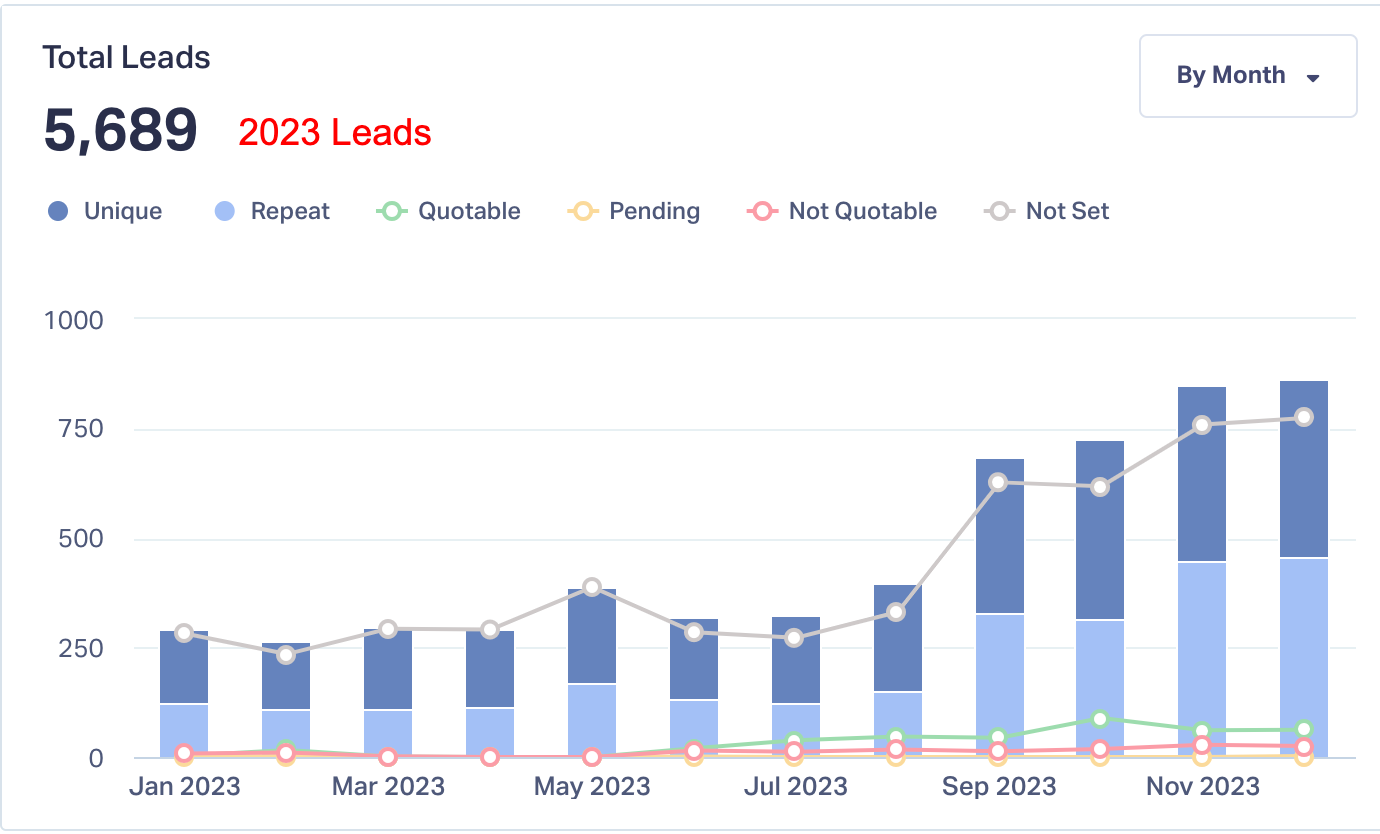
- More than a dozen #1 rankings in a highly competitive market
- An average of 450 incoming leads per month in 2023
- 1,007 incoming leads in January 2024 alone

The practice didn’t just see more activity—they saw real growth. They expanded their team, hired four more dentists, and moved into a larger, modern facility.
This is what happens when you track your marketing properly and connect it to real results. You can read the full case study here.
How to Improve Your Dental Marketing ROI
If your numbers aren’t where you want them to be, the solution usually comes down to one of three areas.
Fix your conversion gaps. If you’re getting leads but not new patients, look at what happens when someone calls or fills out a form. How fast does your team respond? How well is your front desk trained to handle new patient inquiries? Improving your conversion rate by just 10% can have the same effect as doubling your ad budget.
Fill in your tracking gaps. If you don’t have call tracking, set it up. Tools like CallRail and What Converts make it easy to assign numbers to different campaigns and see exactly where your calls come from. For website analytics, Google Analytics is the standard—it’s free and widely used, but some also use Plausible or Matomo for more privacy. Make sure your analytics are set up correctly so all sources are tracked and reports are accurate. You can’t make good decisions with bad data. Many practices make budget decisions of $3,000 to $8,000 a month with almost no reliable information.
Adjust your channel mix based on the data. Once you can see how each channel is performing, move your budget toward what’s working and away from what isn’t. This may sound obvious, but it’s only possible when you have data for each channel.
This is also where testing different dental marketing ideas becomes useful, since you can quickly see what actually drives results and scale the strategies that bring in patients while cutting what doesn’t.
.jpg?width=54&name=Dental%20Marketing%20Scorecard%20(2026%20Edition).jpg)
Frequently Asked Questions About Dental Marketing ROI
How do you calculate dental marketing ROI?
Use this formula: (Revenue Generated – Marketing Cost) ÷ Marketing Cost. A 300% result means you earned $3 in profit for every $1 spent. For accurate results, only include revenue from marketing-attributed patients, not your total practice revenue.
What is a good ROI for dental marketing?
Most practices should aim for a 300% to 500% ROI. Practices focused on high-value cases, like implants or cosmetic dentistry, can see even higher returns since one patient can bring in several thousand dollars. But these benchmarks can vary a lot depending on your market size, local competition, and the services you offer. For example, practices in big, competitive cities may see lower average ROI than those in smaller markets. Offices that mostly offer preventative or low-cost services will also have different ROI benchmarks than those focused on specialty care. Keep these factors in mind to set realistic expectations for your situation.
How long does it take to see results from dental marketing?
Paid ads can bring in leads within days. SEO usually takes three to six months to gain traction and up to 12 months—or more in busy markets—to reach full performance. Track both separately, since they work on different timelines and have different benchmarks.
What is the most important metric to track?
Cost per new patient and lifetime value together show if your marketing is profitable and by how much.
Why am I getting leads but not patients?
This is a conversion gap, often caused by slow follow-up, an undertrained front desk, or a mismatch between your marketing promises and the actual intake experience.
How can I track where my patients are coming from?
Use call-tracking software, set up your website analytics correctly, and train your front desk to ask every new patient how they found you. Together, these three steps give you a clear picture.
Should I focus more on SEO or paid ads?
Both have different strengths. Ads bring faster results, while SEO builds long-term efficiency. Most practices benefit from using both, with the right balance depending on how quickly you need new patients and your budget.
Ready to Know What Your Marketing Is Actually Returning?
Most practices know how much they spend on marketing, but few know what they’re actually getting back. That gap is where a lot of the budget gets wasted.
If your reports show activity but your patient numbers aren’t growing, or you can’t connect your spending to real results, that’s where we can help.
At Titan Web Agency, we work only with dental practices. We set up tracking systems that give you better visibility and transparency into your marketing. We run campaigns for SEO, paid ads, and review generation, with clear measurements for each. We focus on what matters: cost per new patient, lifetime value, and revenue growth.
If you want to know what your marketing is really returning, we can help. Contact us to talk about where you are now and what growth could look like for your practice. You can also explore six dental marketing channels for practice growth on our topic hub.

.png)
.png)
Tyson Downs is the founder of Titan Web Agency, a company specializing in marketing for dental professionals. With an impressive track record of working with over 100 dental practices, Tyson has a deep understanding of the unique marketing needs within the dental industry.

.svg)