---
title: "A Local SEO Guide for Dentists: What Works in 2026 and What Doesn’t"
description: A local SEO guide for dentists in 2026. Learn what’s holding back local rankings, what to fix first, and how to turn visibility into calls and booked appointments.
image: https://blog.titanwebagency.com/hubfs/Blog%20Covers%202026/local-seo-guide-for-dentists-cover-2026.jpg
---
[](https://titanwebagency.com/)
- About
[About Tyson DownsRead more about Tyson Downs](https://titanwebagency.com/about-us/tyson-downs/) [AboutRead more about the team at Titan Web Agency](https://titanwebagency.com/about-us/) [Our ReviewsWhat some of our clients have to say](https://titanwebagency.com/reviews/) [ResultsRead about results we've gotten for our clients](https://titanwebagency.com/results/) [Problems We SolveRead about some of the problems we can help you solve](https://titanwebagency.com/dental-marketing-problems/) [PortfolioCheck out our work](https://titanwebagency.com/portfolio/) [PodcastListen to our podcast](https://titanwebagency.com/podcast/)
Have questions?
Schedule a discovery call to discuss your practice goals.
Schedule Now
- [Blog](https://blog.titanwebagency.com/)
- Resources
Resources
[Dental Marketing GuideSix marketing channels to attract, convert, and retain more patients](https://titanwebagency.com/dental-marketing-guide/) [Running a Dental PracticeThe business disciplines that separate practices that grow from ones that plateau](https://titanwebagency.com/running-a-dental-practice/) [How to Get More Dental PatientsAttract, convert, and keep the patients your practice needs to grow](https://titanwebagency.com/attract-dental-patients/) [Dental Practice TransitionsEverything you need to know about buying, selling, relocating, or starting a practice](https://titanwebagency.com/dental-practice-transitions/)
Have questions?
Schedule a discovery call to discuss your practice goals.
Schedule Now
- Services
Services
[AI Search OptimizationHelp my practice appear in the AIO (AI Overviews), ChatGPT, Claude, Gemini, and more.](https://titanwebagency.com/services/ai-geo/) [Local SEOIncrease my local rankings in Google](https://titanwebagency.com/services/local-seo/) [Pay Per Click ManagementGet better results from Google, Bing, or Meta Ads.](https://titanwebagency.com/services/pay-per-click/) [Web DesignBuild me an awesome website](https://titanwebagency.com/services/web-design/) [Branding & RebrandingBranding or rebranding, we can handle it for you](https://titanwebagency.com/services/branding-rebranding/) [Logo DesignCreate a memorable & brand-able Logo](https://titanwebagency.com/services/logo-design/) [Review ManagementImprove my online reputation, help me get more positive reviews](https://titanwebagency.com/services/review-management/) [Website Hosting & MaintenanceHost, secure, & maintain my website](https://titanwebagency.com/services/website-maintenance/) [See all services →](https://titanwebagency.com/services/)
Have questions?
Schedule a discovery call to discuss your practice goals.
Schedule Now
[(801) 783-3101](tel:8017833101) [Get in touch](https://titanwebagency.com/contact/)
About
[About Tyson DownsRead more about Tyson Downs](https://titanwebagency.com/about-us/tyson-downs/) [AboutRead more about the team at Titan Web Agency](https://titanwebagency.com/about-us/) [Our ReviewsWhat some of our clients have to say](https://titanwebagency.com/reviews/) [ResultsRead about results we've gotten for our clients](https://titanwebagency.com/results/) [Problems We SolveRead about some of the problems we can help you solve](https://titanwebagency.com/dental-marketing-problems/) [PortfolioCheck out our work](https://titanwebagency.com/portfolio/) [PodcastListen to our podcast](https://titanwebagency.com/podcast/)
[Blog](https://blog.titanwebagency.com/)
Resources
[Dental Marketing GuideSix marketing channels to attract, convert, and retain more patients](https://titanwebagency.com/dental-marketing-guide/) [Running a Dental PracticeThe business disciplines that separate practices that grow from ones that plateau](https://titanwebagency.com/running-a-dental-practice/) [How to Get More Dental PatientsAttract, convert, and keep the patients your practice needs to grow](https://titanwebagency.com/attract-dental-patients/) [Dental Practice TransitionsEverything you need to know about buying, selling, relocating, or starting a practice](https://titanwebagency.com/dental-practice-transitions/)
Services
[AI Search OptimizationHelp my practice appear in the AIO (AI Overviews), ChatGPT, Claude, Gemini, and more.](https://titanwebagency.com/services/ai-geo/) [Local SEOIncrease my local rankings in Google](https://titanwebagency.com/services/local-seo/) [Pay Per Click ManagementGet better results from Google, Bing, or Meta Ads.](https://titanwebagency.com/services/pay-per-click/) [Web DesignBuild me an awesome website](https://titanwebagency.com/services/web-design/) [Branding & RebrandingBranding or rebranding, we can handle it for you](https://titanwebagency.com/services/branding-rebranding/) [Logo DesignCreate a memorable & brand-able Logo](https://titanwebagency.com/services/logo-design/) [Review ManagementImprove my online reputation, help me get more positive reviews](https://titanwebagency.com/services/review-management/) [Website Hosting & MaintenanceHost, secure, & maintain my website](https://titanwebagency.com/services/website-maintenance/) [See all services →](https://titanwebagency.com/services/)
Have questions?
Schedule a discovery call to discuss your practice goals.
[Schedule Now](https://titanwebagency.com/contact/)
[Call (801) 783-3101](tel:8017833101) [Get in touch](https://titanwebagency.com/contact/)
×
Updated October 18, 2026 by [Tyson Downs](https://blog.titanwebagency.com/author/tyson-downs) [Leave a Comment](https://blog.titanwebagency.com/local-seo-guide-for-dentists#comments-listing)
# A Local SEO Guide for Dentists: What Works in 2026 and What Doesn’t
Local SEO for dentists has changed significantly in 2026, and many practices that did the right things still aren't showing up consistently. Have you already worked with a marketing company, but local results still feel weak?
Table of Contents
[What’s New in 2026: GEO and Local SEO](https://blog.titanwebagency.com/local-seo-guide-for-dentists#geo-local-seo)[Fix-First SEO Priorities for Dental Practices](https://blog.titanwebagency.com/local-seo-guide-for-dentists#seo-priorities) [Google Business Profile Ranking Signals](https://blog.titanwebagency.com/local-seo-guide-for-dentists#gbp) [Why Local SEO Stops Working and How to Recover](https://blog.titanwebagency.com/local-seo-guide-for-dentists#why-local-seo)[How to Measure Local SEO Success](https://blog.titanwebagency.com/local-seo-guide-for-dentists#local-seo-succcess) [Common Local SEO Mistakes Dentists Make](https://blog.titanwebagency.com/local-seo-guide-for-dentists#seo-mistakes)
## Key Takeaways
- Local SEO works best when the basics are fixed in the right order.
- Clear business details and a strong Google Business Profile matter more than adding new tactics.
- Service pages that match patient intent and consistent reviews drive real local visibility.
- Measuring success through calls, direction requests, and bookings is more reliable than rankings alone.
- When accuracy, clarity, and trust are fixed first, dental practices are more likely to appear in local results, AI answers, and nearby patient searches in 2026.
This guide explains how local SEO works for dental practices and how to evaluate what’s helping or hurting your visibility. If you are looking for done-for-you services, see how our [dental SEO agency](https://titanwebagency.com/services/local-seo/) works.
To see where local search fits alongside paid advertising, your website, and patient follow-up, start with our [dental marketing guide](https://titanwebagency.com/dental-marketing-guide/).
You’ve updated your website. You’ve claimed your [Google Business Profile](https://business.google.com/en-all/business-profile/). You may even see impressions going up. Yet you don’t show up consistently in local searches. Nearby competitors appear above you. Calls and bookings don’t match the visibility reports you’re seeing.
Research from BrightLocal shows that about [46% of Google searches have local intent](https://www.brightlocal.com/resources/local-seo-statistics/). When your practice misses local visibility, you’re not missing traffic. You’re missing nearby patients who’re ready to act.
We see this pattern often. Practices do the right things, but in the wrong order, or without first fixing the local signals that matter most.
This post breaks down local SEO for dentists, but here’s what you should know right now. Local SEO stops working when key local signals fall out of sync, and no one brings them back into alignment.
Before selecting an SEO provider, [understand dental seo pricing](https://blog.titanwebagency.com/dental-seo-services-cost)to budget appropriately for your market.
A question we hear all the time is:
### Why is my dental practice not ranking locally even though we already did SEO?
The answer is usually pretty straightforward.
Local rankings stall when Google sees mixed signals about trust, relevance, and activity. If those signals don’t align, visibility drops even if the basics look done. That matters because Google data shows that about [76% of local mobile searches](https://en.wikipedia.org/wiki/Location_search_optimization) lead to a visit within a day.
Quick checklist to diagnose the problem.
- Inconsistent name, address, and phone details across directory listings
- Weak location focus on your main pages
- Slow, minimal, or non-existent review growth
- Incorrect Google Business categories
- Missing "proof" (before/after, office photos, staff, etc)
- Entity confusion
- OR: it may be ranking for terms or phrases you aren't aware of, and your tracking is to blame.
This guide shows you what to fix first, what to ignore, and what still works in 2026.
If your practice isn't showing up consistently in local searches, brushing up on [local SEO strategies for dental practices](https://titanwebagency.com/services/local-seo/) will show you exactly where the gaps are.
What's Inside
### This post is the summary. Here's the full blueprint
Ten steps covering the Google Business Profile, reviews, listings and the AI answers now sitting above the map pack.
1Build a rock-solid Google Business Profile, section by section
2Generate reviews that build trust, and keep them coming
3Keep your name, address and phone consistent everywhere
4Optimize your website for local search
5Earn local backlinks that actually count
6Overcome the distance problem when you're not nearest
7 to 9Stay active on your profile, improve site performance, expand service-area reach
10Show up in AI search, not just the map
[Get the Free Guide](https://info.titanwebagency.com/get-found-first?utm_source=blog&utm_medium=inline_cta&utm_campaign=get-found-first&utm_content=local-seo-guide-for-dentists-mid)
15 pages. One email, no phone call.
## What Local SEO for Dentists Actually Looks Like in 2026
A [winning local SEO strategy](https://titanwebagency.com/results/) isn’t a long checklist or a collection of disconnected tasks. It’s a system that connects how patients search with how Google decides which dental practices to show.
In 2026, achieving strong local search visibility typically relies on a few core elements working in tandem.
### Local intent and clear service focus
Most patients search with both location and purpose in mind. They want care nearby and a specific service. Searches such as “*dentist near me,”* “*emergency dentist,”* or “*teeth cleaning*” signal both urgency and intent.
Your practice needs to match both. Google has to understand where you are and what you actually offer. When service pages are vague, or services aren't clearly tied to location, local rankings stall, even if your website looks polished.
### How Google decides which local practices to show
Google describes [three main factors behind local rankings](https://support.google.com/business/answer/7091): relevance, distance, and prominence.
Relevance is how well your practice matches the search. Distance is how far your office is from the person searching. Prominence reflects how well-known your business is, including signals such as links from other websites and Google reviews.
That’s why your position can change across town, even for the same search. Start with accurate practice information, categories that describe your business, and pages that explain your services. Reviews and relevant links also matter. No single change guarantees a particular Maps position.
### Aligned signals across your website and listings
Make it easy for patients to recognize the same practice wherever they find you. Your website, Google Business Profile, and important directory listings should show your current business name, address, and phone number.
After a move, name change, or phone-number change, check those sources for outdated details. Also make sure your website clearly identifies your dentists, services, and office location. Accurate information helps patients reach the right practice and gives search systems clearer information about your business.
### Measurement tied to real outcomes
A winning strategy tracks more than rankings. Calls, direction requests, form submissions, and booked appointments show whether local search visibility is actually bringing in nearby patients.
Without this feedback, it’s hard to know what’s working or what needs attention next.
When these pieces line up, local SEO stops feeling random. Your practice shows up more often in local search results and AI summaries, nearby patients find you faster, and visibility turns into booked appointments instead of empty impressions.
## What’s New in 2026: How Generative Engine Optimization (GEO) Overlaps with Local SEO
Search visibility in 2026 isn’t just about blue links and map results anymore. Patients increasingly see answers summarized by AI tools before they ever compare websites. This is where [Generative Engine Optimization (GEO)](https://titanwebagency.com/services/ai-geo/) comes in.
Generative Engine Optimization refers to how search engines and AI systems reuse, summarize, and recommend information when generating answers. Instead of ranking ten results, these systems often provide a short explanation or suggestion based on sources they trust.
For dental practices, GEO doesn’t replace local SEO. It builds on it.
Local SEO still determines whether your practice is eligible to appear in nearby searches. Google Business Profile accuracy, service clarity, reviews, and location relevance still matter most. What’s new is how those same signals are now used by AI systems to explain options to patients.
When your practice information is clear and consistent, AI systems can confidently describe what you offer, where you’re located, and when you’re relevant. When it isn’t, those systems hesitate or leave you out entirely.
Local SEO creates the factual and trust foundation that AI systems need. For the implementation framework, read our guide to [improving dental practice visibility in AI search](https://blog.titanwebagency.com/geo-dental-visibility).
This is why clarity matters more than ever.
The same work that improves local rankings also increases the chances your practice is referenced in AI-generated answers. GEO isn’t a separate checklist. It’s the result of doing local SEO well in a way machines can easily understand.
Improving your local search rankings takes more than one fix. Get the full picture with these [improving dental practice local rankings](https://blog.titanwebagency.com/topic/local-seo) resources.
Read our blog post: [Why Some Dentists Rank on Google Maps but Don't Appear in AI Answers](https://blog.titanwebagency.com/google-maps-vs-ai-search)
## Your Fix-First Roadmap: What to Prioritize When Your Dental SEO Isn’t Working
When local SEO isn’t producing calls or bookings, adding more tactics usually makes things worse. A fix-first approach works better. You correct the issues that block local visibility before you add anything new.
If your dental SEO isn’t working, these are the areas to prioritize, in order.
- **Confirm your local foundation:** Your business name, address, phone number, services, and categories must match across your website, Google Business Profile, and major listings. Inconsistencies here create trust gaps that stop local rankings from stabilizing.
- **Improve service and location clarity:** Search engines need to clearly understand what you offer, where you offer it, and who it’s for. Google remains the primary driver of local discovery, but AI systems rely on the same clarity signals when summarizing or recommending practices. Vague service pages or weak location signals force systems to infer intent, which limits local visibility.
- **Strengthen trust signals:** Reviews, photos, and profile activity should grow steadily over time. Consistent signals build confidence.
- **Track actions, not just visibility:** Calls, direction requests, form submissions, and booked appointments show whether local search visibility is bringing in nearby patients. Rankings alone don’t tell that story.
- **Remove low-impact distractions:** Generic blog posts, keyword chasing, and one-time optimizations rarely fix local visibility problems. These activities add noise without resolving core trust or relevance issues.
If you want to apply this roadmap without guessing, our Fix-First Checklist breaks these priorities into clear, actionable checks you can follow yourself or hand off to your team.
## Google Business Profile Signals that Influence Local Rankings
Google Business Profile plays a central role in local SEO, but it isn’t the whole strategy. Think of it as a trust-and-relevance amplifier. When your profile is clear, accurate, and active, Google feels more confident showing your practice to nearby patients.
For most dental practices, this is the fastest place to see real movement. [Improving your Google Business Profile](https://info.titanwebagency.com/get-found-first) often yields the biggest gains first, particularly in terms of calls and directions requests. It doesn’t replace your website or reviews, but it connects them. In local search, Google Business Profile often does most of the heavy lifting. When it’s weak, other improvements struggle to show results.
Below are the profile signals that tend to move the needle most.
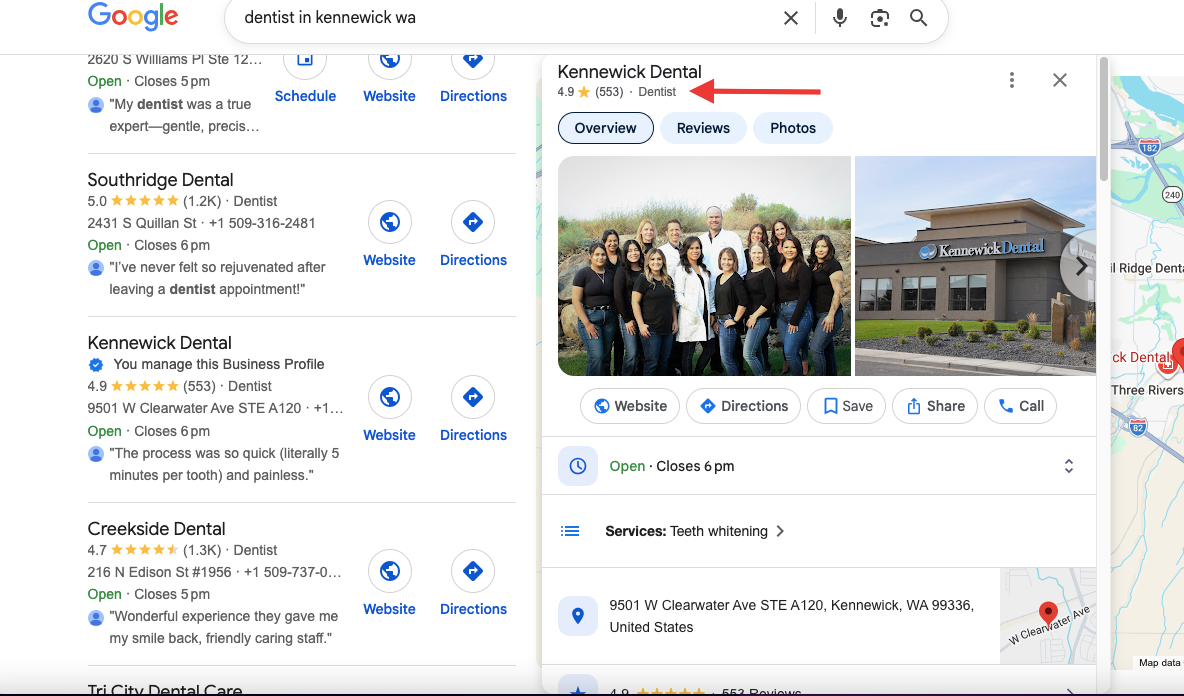
### Categories and services that match your actual practice
Categories tell Google what kind of practice you run and when to show it. Your primary category matters the most. It should reflect your main service, not everything you offer.
Secondary categories help refine visibility, but they still need to match reality. A common mistake is choosing broad or mismatched categories to appear in more searches. That usually backfires.
When categories don’t align with your actual services, your practice shows up for the wrong searches or not at all. The result is lower relevance, fewer calls, and weaker local rankings.
### Use the right address and business type
If patients come to your dental office, your Google Business Profile should show the office’s accurate address and map pin. Check that directions lead patients to the correct entrance.
Google uses service areas for businesses that travel to customers or deliver to them. Drawing patients from nearby cities doesn’t, by itself, make a dental office a service-area business.
If your practice also provides care at patients’ locations, review [Google’s service-area and hybrid-business guidance](https://support.google.com/business/answer/9157481) before changing those settings. Choose the setup that describes how you actually deliver care.

### Service descriptions written in patient language
Service descriptions work best when they sound like patients, not marketers. Avoid keyword-heavy language and focus on clarity.
Strong descriptions explain who the service is for, what problem it solves, and what outcome a patient can expect. Mention insurance or financing options if they apply. Address pain relief, comfort, and results in plain language.
When descriptions feel human and specific, they build trust and make it easier for patients to decide to contact you.
### Photos and media that support trust and conversions
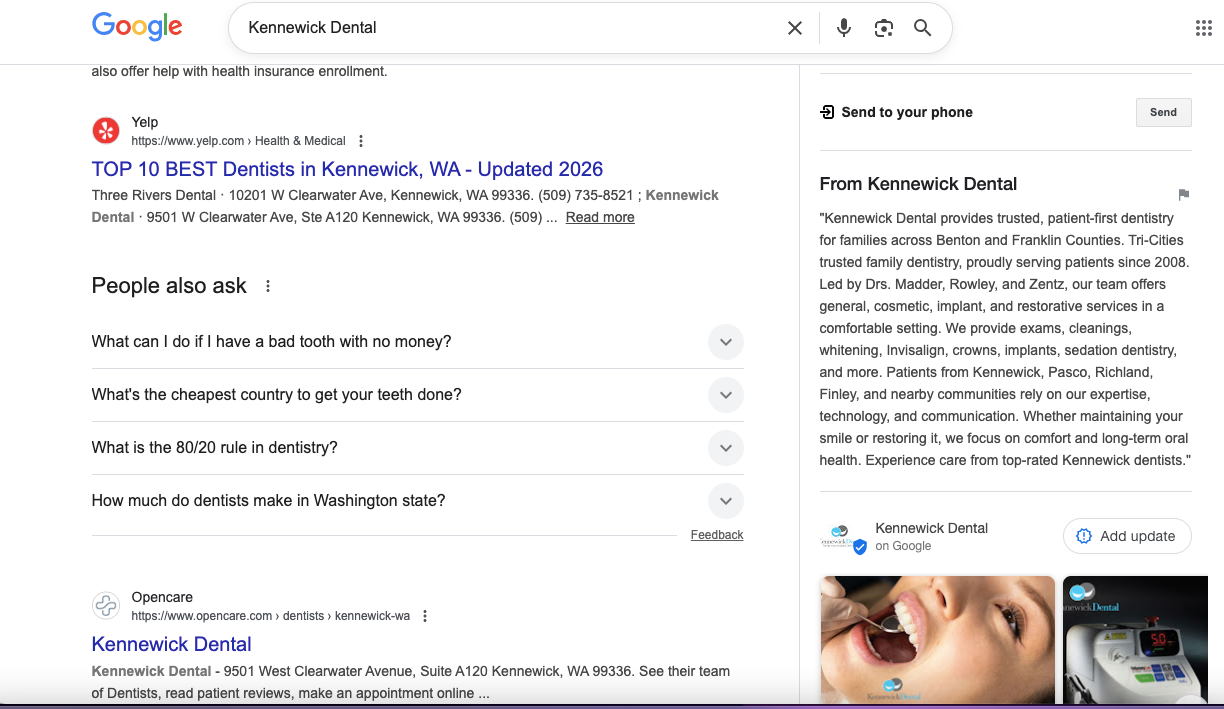
Photos act as proof. They show patients what to expect and help Google assess credibility.
Useful photos include clear exterior signage, the reception area, operatories, and team members. Visuals that show what a visit looks like reduce uncertainty and support conversions.
Current and accurate media signals professionalism. Outdated or missing photos create hesitation, even when rankings look fine.
When these Google Business Profile signals align, maintaining local visibility becomes easier. More importantly, impressions turn into calls, direction requests, and booked appointments rather than just silent views.
## Website Optimization that Supports Local SEO Beyond the Basics
Your website supports local SEO when it clearly matches local intent and makes it easy for nearby patients to take action. This goes beyond technical setup or generic on-page SEO.
For dentists, website content works best when it connects specific services to real patient needs and clear next steps.
### What to Put on a Dental Service Page: A Checklist
A dental service page has one job: help a patient decide. That means answering what the treatment is, whether it’s right for them, what it costs and who will do it, in the first few lines, then backing that up with real details about your practice. This is the checklist we use when we build service pages for dental practices.
#### Before You Write It
- **One service, one search.** Give each treatment its own page, and check that no other page on your site is already chasing the same search. Two pages competing for "dental implants" usually means neither ranks well.
- **Look at what already ranks.** Open the pages that show up in your area for that service. Cover what they cover, and go further where patients need it, but don’t pad to hit a word count.
- **Gather real facts first.** Who performs the treatment, the technology you actually use, sedation options, the insurance you take, financing terms and reviews that mention this service. A page built on real details is easier to trust and easier for AI tools to quote.
#### On the Page
- **A clear H1 with the service and city,** such as "Dental Implants in \[City, State\]," with call and booking buttons near the top.
- **A direct answer in the first few lines.** Two to four sentences: what the treatment is, who it’s for and what to do next. That opening is often what AI tools pull when your practice [shows up in AI answers](https://blog.titanwebagency.com/geo-dental-visibility). The [DeLand Family Dental implant page](https://delandfamilydental.com/dental-implants/) does this well. Its opening names the dentist, where he trained and the range of cases he treats before it says anything else. The [Burien Dental emergency page](https://buriendental.com/services/emergency-dentistry/) puts its answer in an "At a Glance" box right under the headline: the emergencies it treats, the dentists by name, same-day or next-day availability and the after-hours text line. The [Kirkland Family Dentistry veneers page](https://kirklandteeth.com/cosmetic-dentistry/veneers/) does the same with a "Short Answer" box that names its dentists, its office hours and its phone number.


- **The problems that bring patients in, in their words.** A chip that shows up in every photo, a gap they’ve never liked, a denture that slips. The Kirkland veneers page opens exactly this way, with the reasons people actually look into veneers.

- **Whether it’s right for them.** Who’s a good candidate, what can rule them out and how the treatment relates to others. Say the relationship plainly: "If too little tooth is left for a filling, we’ll usually recommend a crown."
- **A comparison when patients are weighing options.** The [Burien Dental veneers page](https://buriendental.com/services/cosmetic-dentistry/porcelain-veneers/) compares veneers, bonding and whitening side by side in one table. The [DeLand Family Dental Invisalign page](https://delandfamilydental.com/invisalign/) answers "Should I get Invisalign or braces?" in its own section.

- **What to expect, step by step.** How many visits, numbing or sedation, recovery and aftercare.
- **How long it takes and how long it lasts,** with the factors that change the answer and no guarantees.
- **Cost, insurance and financing.** What affects the price, which plans you’re in-network with and how financing works. Give a price range only if the practice is comfortable publishing one. Both veneers pages above have a cost section with the city in the heading.
- **Practice proof instead of "Why Choose Us."** The dentist who does the treatment and their training, the technology you actually use, languages your team speaks, hours, same-day availability and two or three real reviews quoted word for word.
- **An FAQ for the questions you haven’t answered yet.** Don’t repeat the page. The Burien veneers FAQ covers what’s left: "Will veneers look fake?", "Should I get a veneer or a crown?" and "Can I whiten veneers later?"
- **A short closing call to action** with the areas you serve, your address and your phone number.
#### Behind the Page
- **A title tag and meta description** with the service and city, one H1 and headings in a clean order.
- **Internal links with descriptive anchors,** out to related services and in from your homepage and related pages.
- **Real photos** with descriptive file names and alt text, not stock images.
- **Schema** that marks your practice as a Dentist, describes the Service and adds FAQPage only when the page shows an FAQ. Skip review-star markup on your own site.
- **A clinical review by the dentist,** with links to sources like the ADA or FDA for any clinical claim.
- **Follow-up after it goes live:** request indexing, check the title and headings Google shows and track where the page ranks. A [dental SEO agency](https://titanwebagency.com/services/local-seo/) should be doing this for every page it publishes.
#### What Most Service Pages Get Wrong
- **Opening with filler instead of an answer.** Lines like "We know how stressful a dental problem can be" tell the patient nothing and give AI tools nothing to quote.
- **Never saying who does the treatment.** If the page doesn’t name the dentist and their training, patients can’t judge them, and AI tools can’t connect your practice to the service.
- **"We’ll determine what’s right for you."** It sounds safe, but it answers nothing. State the real relationship between treatments instead.
- **Avoiding cost completely.** Even without prices, you can explain what affects the cost, which insurance you take and how financing works.
- **"Why Choose Us" filler.** "State-of-the-art technology" and "a compassionate team" appear on nearly every dental site. Name the actual technology, languages, hours and same-day availability instead.
- **One template with the service name swapped.** If your crowns, veneers and implants pages read the same apart from the headline, patients notice, and so does Google.
- **Writing for keywords instead of patients.** Repeating the city name in every paragraph doesn’t answer anyone’s question.
- **The phone number only at the bottom.** Someone with a toothache shouldn’t have to scroll to find how to call.
Building pages like this takes longer than filling in a template, but it’s what makes a page rank, get quoted by AI tools and turn a visit into a booked appointment. If you’d rather have it done for you, it’s the same checklist our [dental web design company](https://titanwebagency.com/services/web-design/) team works from.
### Add local relevance without playing the keyword game
Local relevance works best when it feels natural. You don’t need to repeat city names in every sentence.
Focus on context instead:
- **Mention nearby neighborhoods or areas when it makes sense:** Use locations patients recognize without forcing repetition.
- **Reference real-world orientation points:** Include driving directions, landmarks, or well-known local areas.
- **Let patients provide local proof:** Use reviews or testimonials that naturally mention communities you serve.
- **Keep readability the priority:** These signals help Google connect your pages to local intent searches while keeping content clear and trustworthy.
### Local schema and structured data that you need to be using
Structured data helps search engines understand your practice, but it doesn’t need to be complicated.
At a minimum, your site should include local business schema and dentist schema markup. Your name, address, and phone number should match everywhere they appear.
You can also reinforce credibility by linking to authoritative sources where appropriate. For example, linking to the [American Dental Association](https://www.ada.org/) or a local dental society from team or credential pages supports trust and expertise.
When website content, local relevance, and structured data work together, your site becomes a stronger support system for local SEO instead of just a digital brochure.
## Hyperlocal Pages and Location Strategy When You Need Them
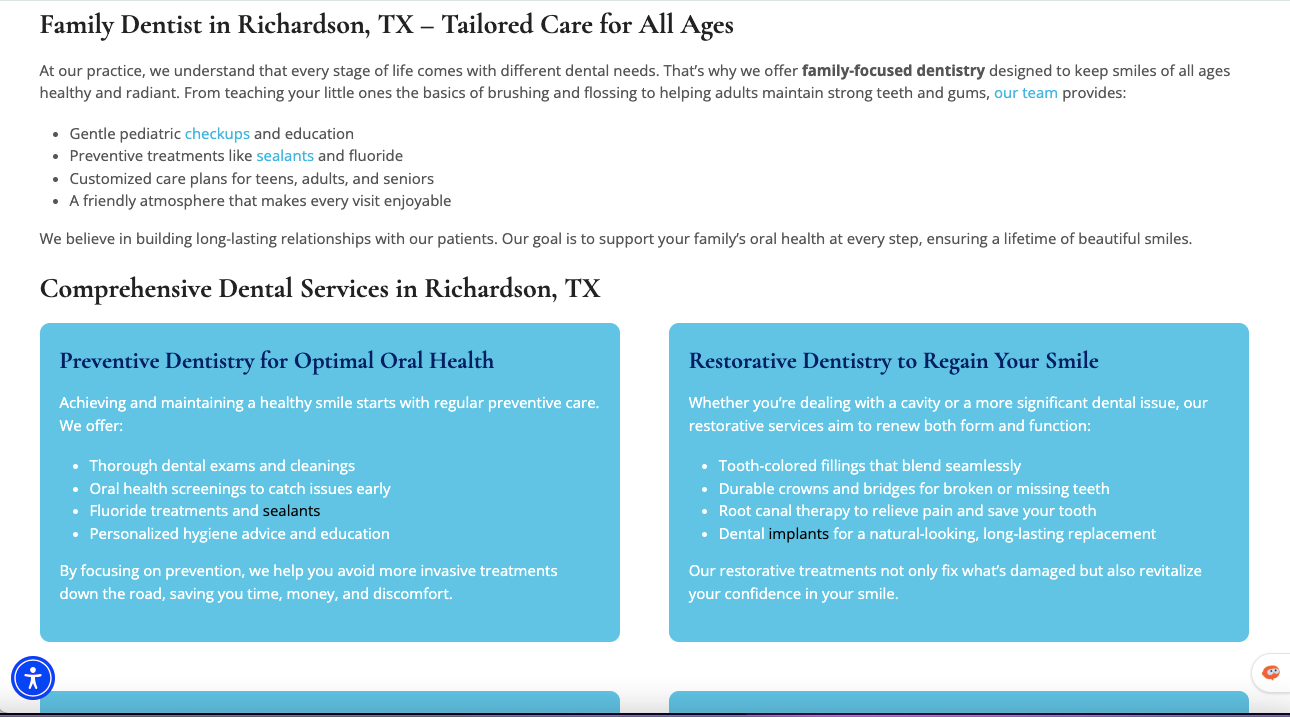
Hyperlocal pages can boost local SEO, but only when used for the right reasons. Creating location pages for every nearby suburb is not a strategy in itself. In many cases, it creates thin pages that undermine trust rather than improve visibility.
You should consider a location page when you genuinely serve patients in that area, see demand from local intent searches, or have enough proof to support relevance. This often applies to practices with multiple locations or a clear draw from specific nearby areas.
You shouldn’t create location pages just to chase rankings. Pages with copied content, vague service lists, or no local proof rarely perform well. Google tends to ignore them, and patients don’t trust them.
Used correctly, location pages act as focused [local landing pages](https://blog.titanwebagency.com/dental-landing-page-google-ads). They help nearby patients find the right office and make it easier for visibility to turn into booked appointments.
### What a high-performing location page should include
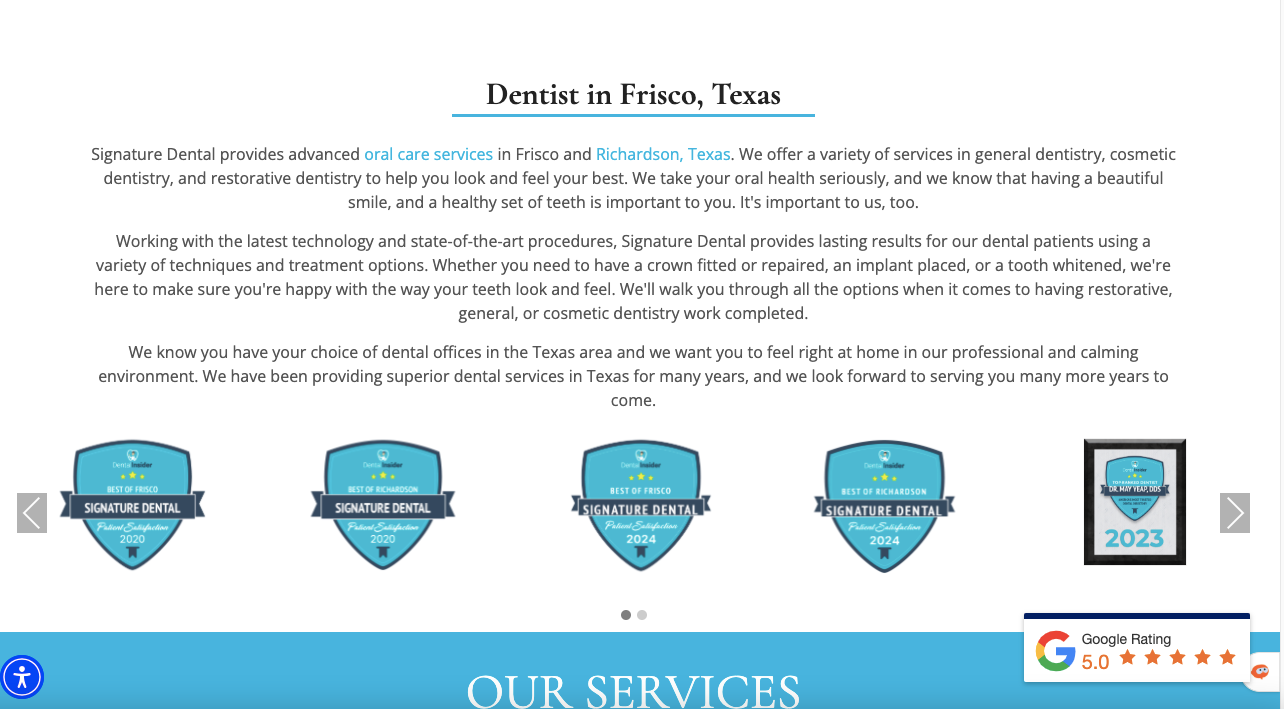
A strong location page feels specific, not generic. It should make it obvious that the practice actually operates in or serves that area.
A high-performing location page usually includes:
- **A localized introduction:** Open with content written for that specific area. Avoid copy pasting the same intro across multiple pages.
- **Services offered at that location:** List the services patients can receive there so Google and patients understand relevance right away.
- **Local proof:** Include reviews, patient stories, landmarks, or references that show a real connection to the area.
- **Clear calls to action:** Make it easy to call or book online without scrolling or guessing.
- **Trust blocks:** Show the team, credentials, accepted insurance, or affiliations to build confidence quickly.
## Reviews and Reputation Signals That Influence Patient Trust
Reviews do more than influence local rankings. They shape whether patients trust your practice enough to call or book. A strong review presence supports visibility, but its real value shows up in conversions.
For dental practices, reviews work best when they’re treated as an ongoing system rather than a one-time push.
### **A review system that works without being awkward**
The goal isn’t to pressure patients. It’s to make leaving a review easy and timely.
A [simple review workflow](https://titanwebagency.com/services/review-management/) usually looks like this:
- **Who asks:** A staff member patients already trust, often at checkout or after treatment.
- **When to ask:** Shortly after a positive visit, while the experience is still fresh.
- **What to say:** Keep it simple and human. Ask for honest feedback, not a perfect rating.
What matters most is consistency. A steady flow of reviews over time builds more trust than short bursts followed by silence.
### How to respond to reviews professionally and safely
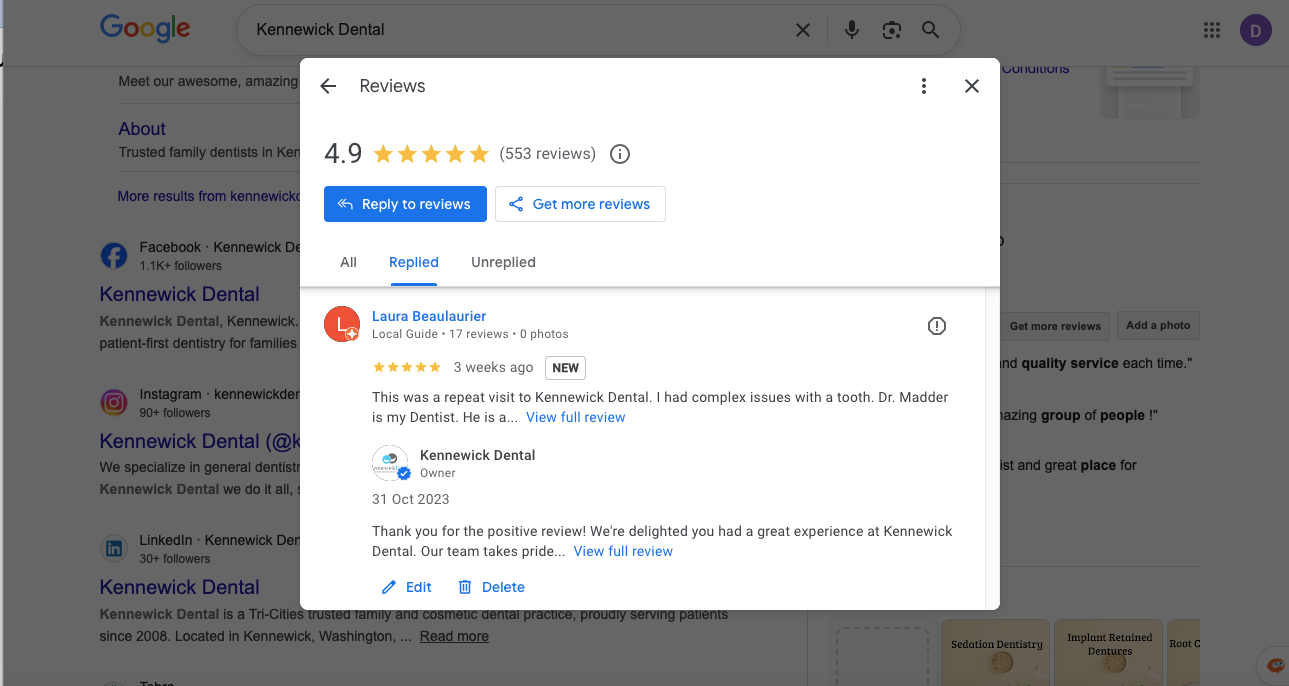
[Review responses](https://blog.titanwebagency.com/dentist-reputation-management)show patients how your practice communicates. It’s also something that Google wants to see.
- Thank reviewers without sharing personal or clinical details
- Keep responses calm, respectful, and consistent
- Avoid confirming someone is a patient or discussing treatment specifics
You don’t need long replies. Consistent, professional responses reinforce trust and help patients feel confident choosing your practice.
## Keeping your business details consistent across local listings
Citations and listings still play a role in local SEO, but only when they support a clean and consistent system. The goal is not to be listed everywhere. The goal is to avoid conflicting information that creates doubt.
NAP consistency means keeping your business name, address, and phone number the same across your website, Google Business Profile, and key directory listings. Google considers these sources together to determine which details are accurate and trustworthy.
When your business details don’t match, Google has a harder time deciding which information to rely on. That uncertainty can reduce the frequency with which your practice appears in local search results.
What matters most is accuracy in the places that actually influence trust.
- **Fix your core sources first:** Make sure your website, Google Business Profile, and major directories patients use all show the same business details.
- **Correct obvious errors and duplicates:** Old addresses, outdated phone numbers, duplicate listings, or variations in your business name should be cleaned up.
- **Ignore low-value directories:** You don’t need to chase every listing site. Being listed everywhere doesn’t help if the information isn’t consistent.
A small number of accurate, reliable listings does more for local SEO than dozens of conflicting ones. When your business details are consistent, other local signals work together rather than against each other.
## Local content strategy dentists can use in 2026 that actually drives patients
Local content works best when it’s treated as a long-term digital asset. The goal isn’t to publish often. It’s to answer the questions local patients are already searching for and turn that interest into consultations.
A strong local content strategy focuses on local intent searches tied to urgency and value. This is where high-value patients come from, not broad informational topics.
Content that performs well in 2026 usually aligns with:
- Emergency and pain-driven searches
- High-value services patients research carefully
- Local intent without forcing “near me” language
Examples of content topics that tend to drive results:
- What to do when you have a toothache and can’t sleep
- Emergency dentist options for severe tooth pain
- Veneers for chipped or worn teeth
- Same-day dental crowns and who they’re for
- Tooth replacement options after an extraction
- What to expect during an emergency dental visit
These pages work because they answer real patient questions and stay relevant over time. When done well, they support local rankings and bring in high-value patients.
## How dentists show up in AI answers and how to increase your chances
AI tools don’t work like traditional search results. Instead of sending users through multiple links, they summarize answers directly. That’s why visibility now depends on how clearly your content explains things, not just where it ranks.
AI systems look for content they can understand and reuse with confidence. That means clarity, structure, and authority matter more than volume.
Content is more likely to be quoted or summarized when it includes:
- Question style subheadings that match how patients search
- Direct answers near the top of each section
- Short checklists or bullet points
- Clear definitions written in plain English
This isn’t about tricking AI systems or chasing mentions. It’s about clearly structuring your expertise, with an understanding of how GEO improves visibility in AI results, so AI tools can pull answers from your site instead of guessing.
The fundamentals still apply. Clear explanations. Consistent signals. Real authority. The end goal hasn’t changed. Visibility only matters if it leads to calls, consultations, and booked appointments.
When your content answers patients' questions well, it also performs better in AI-generated responses.
## Why local SEO sometimes stops working and how to recover
Before changing your marketing, identify what actually declined. A drop in Maps visibility, fewer website visits, and fewer booked appointments are different problems.
Use this table to decide where to start. Each row gives you something to investigate, not a diagnosis.
| What you’re seeing | What to check first | What to do next |
| --- | --- | --- |
| Your practice appears near the office but disappears farther away | Compare the same search from several locations. Check your address, map pin, and business categories. | Identify where visibility falls off. Account for distance before assuming the entire campaign has stopped working. |
| Maps visibility dropped suddenly | Check profile status, recent edits, and whether the decline affects several searches or just one. | Resolve any profile restriction or incorrect information first. Record when the change happened so you can compare it with other updates. |
| Website traffic dropped after a redesign | Check affected pages in Search Console, redirects from old URLs, and whether important content was removed. | Fix broken redirects or indexing problems and restore useful content that was lost. |
| Visibility is steady, but inquiries have fallen | Test the phone number, appointment links, and forms. Check tracking and compare the same reporting periods. | Repair anything that prevents contact or causes inquiries to go unrecorded before changing the SEO strategy. |
| Inquiries are steady, but bookings have fallen | Review answered and missed calls, follow-up, appointment availability, and the kinds of inquiries coming in. | Address the specific booking problem. Count qualified new-patient inquiries separately from spam, existing-patient calls, and other contacts. |
| Maps visibility is strong, but AI mentions are weak | Compare local rankings and AI responses separately, using consistent searches and prompts. | Review the difference between Maps and AI visibility before treating it as a local-ranking decline. |
If that last row sounds familiar, our guide to [Google Maps rankings versus AI visibility](https://blog.titanwebagency.com/google-maps-vs-ai-search) explains why the two can differ.
## How to measure local SEO success for dental practices the right way
Your reports should help you answer three questions: Are people finding the practice? Are they contacting you? Are those inquiries becoming appointments?
Keep those stages separate. A search interaction can show interest without resulting in a conversation or a booking.
### What the numbers actually tell you
| Metric | What it tells you | What it doesn’t establish |
| --- | --- | --- |
| Google Business Profile views | People viewed your profile on Search or Maps. | That they contacted your practice. |
| Google Business Profile calls | Someone clicked the call button on your profile. | That the call connected, was answered, or came from a prospective patient. |
| Direction requests | Someone requested directions to your office. | That they visited or were a new patient. |
| Website clicks | Someone clicked through from your profile to your website. | That they submitted a form or booked. |
| Tracked calls and form submissions | Your tracking recorded an inquiry. | That the inquiry was qualified or became an appointment. |
| Confirmed new-patient bookings | Your appointment records show a new-patient booking. | Which marketing source deserves credit unless that source was also recorded. |
Google’s [Business Profile performance report](https://support.google.com/business/answer/9918094) can include activity from both organic results and Google Ads. Don’t label the entire report as SEO-generated leads.
Compare equal-length periods and account for changes in office hours, advertising, and appointment availability. When possible, connect inquiry records with booking records so you can see what happened after someone contacted you.
Review missed calls separately. They may reveal a follow-up problem, but a missed call alone doesn’t prove there was a qualified patient ready to book.
## Common Local SEO Mistakes Dentists Make in 2026
Most local SEO problems don’t come from doing nothing. They come from doing the wrong things consistently or doing the right things without a system.
These are the mistakes we see most often when local rankings stall or visibility doesn’t convert into patients.
- **Inconsistent business information:** Name, address, or phone details don’t match across the website, Google Business Profile, and key listings.
- **Thin or duplicated location pages:** These pages exist solely for ranking and offer little local proof or value to patients.
- **No system for collecting reviews:** Reviews come in randomly or only after a push, instead of through a steady, repeatable process.
- **Wrong or mismatched Google Business Profile categories:** Primary or secondary categories don’t reflect actual services, which hurts relevance.
- **Service pages built for keywords instead of patients:** See the [service page checklist](https://blog.titanwebagency.com/local-seo-guide-for-dentists#service-page-checklist) above.
- **Focusing on rankings instead of actions:** Reports look good, but calls, direction requests, and bookings aren’t tracked or reviewed.
- **Outdated service content:** Pages don’t reflect current services, technology, pricing context, or how patients search today.
- **Ignoring missed calls:** Call tracking shows demand, but missed calls aren’t reviewed or addressed.
- **Treating local SEO as a one-time setup:** Profiles, pages, and listings aren’t maintained over time, leading to slow decline.
Most of these mistakes don’t require new tools or more content to fix. They require clearer priorities, better consistency, and regular review.
## How a Dental Practice Increased Monthly Leads by Over 2,400%
### The problem
This dental practice in Washington state faced two major obstacles that were holding back growth.
First, the practice had an inherited brand that worked against local visibility. The business name and URL were memorable but unclear, which limited how search engines and patients understood what the practice actually offered. The owner knew a rebrand was needed, but felt overwhelmed by the scope and risk.
Second, the practice was locked into an agreement with a large national marketing company. Despite paying monthly, there was no clear reporting, communication suffered due to staff turnover, and there was no reliable way to track whether marketing efforts were producing leads.
Local SEO wasn’t failing. It just wasn’t producing measurable demand.
### The fix-first strategy
We started by removing friction before adding scale.
- First, we led a full rebrand focused on clarity and eligibility. The practice adopted a clear, service-aligned name and URL that made it easier for search engines and patients to understand what the business was and who it served.
- Second, we rebuilt the local foundation. The Google Business Profile was optimized, listings were audited and corrected, and review generation was structured into a repeatable process. This ensured consistency across the local ecosystem.
- Third, we redesigned and rebuilt the website around ideal patient intent. Core services were clearly defined, messaging was rewritten to speak directly to high-value patients, and on-page structure was optimized for local search visibility and conversions.
- Finally, we added proper tracking. Call tracking, lead tracking, and analytics were implemented to measure performance in real terms, not guesswork. Paid search and Local Service Ads were layered in only after the foundation was stable.
No guessing. No vague reporting. Just clarity and measurement.
### The results
The impact was substantial and sustained.
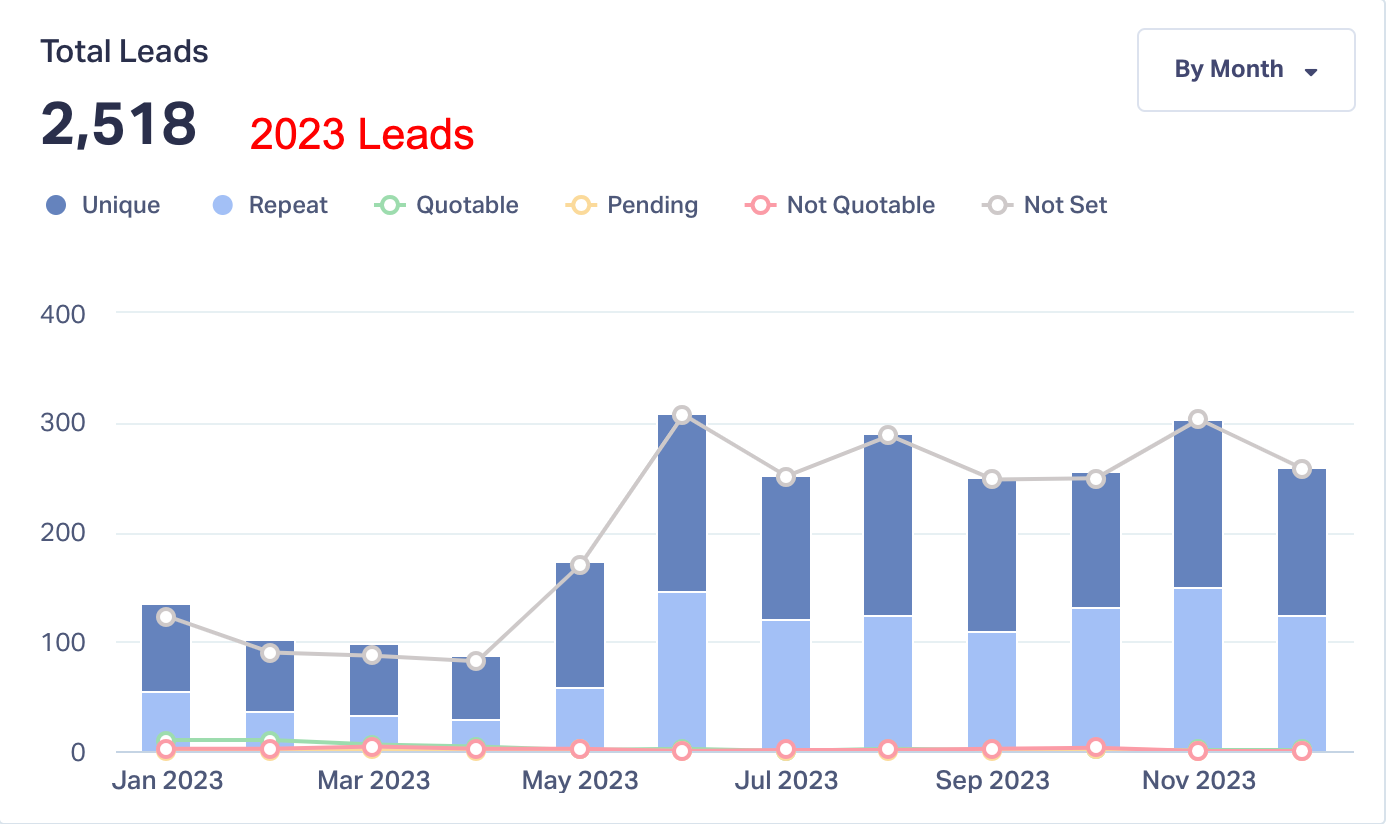
- When we started, the practice generated roughly 5-10 leads per month.
- By the end of 2023, lead volume increased to 2,518 incoming leads, averaging 200+ leads per month.
- In 2024, results grew again to 3,784 incoming leads, or about 315 leads per month.
- The increase in demand supported real business expansion, including the addition of two new partners.
- The practice also built a new facility with additional office space to support growth.
- Local rankings improved alongside lead growth, with consistent top-three positions across core service keywords.
- More importantly, visibility translated into calls, inquiries, and booked patients, not just impressions.
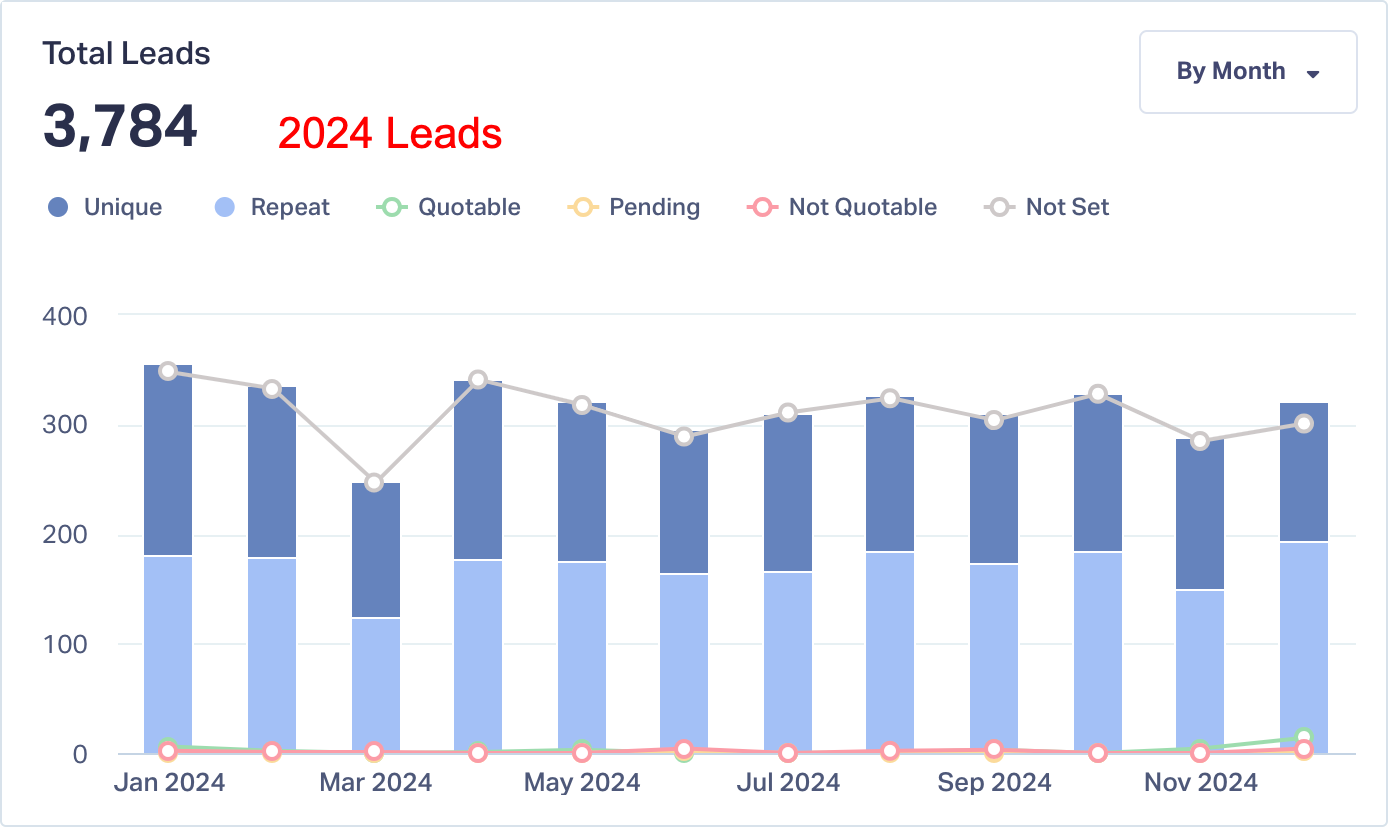
This growth didn’t come from chasing tactics. It came from fixing identity, clarity, and measurement first.
When a dental practice removes confusion around what it is, aligns local signals, and tracks real outcomes, local SEO stops being abstract. It becomes a predictable driver of leads and long-term growth.

Ten steps to showing up first in local search
Business Profile, reviews, listings, and the AI answers above the map.
[Get the Guide](https://info.titanwebagency.com/get-found-first?utm_source=blog&utm_medium=inline_cta&utm_campaign=get-found-first&utm_content=local-seo-guide-for-dentists-end)
## Frequently Asked Questions About Local SEO in 2026
### How long does local SEO take to work for dentists in a competitive area?
In competitive areas, meaningful local SEO improvements usually take 60 to 90 days once core issues are fixed. Faster movement often happens when visibility problems come from accuracy, clarity, or trust gaps rather than authority alone.
- Fixing Google Business Profile issues shows the impact fastest
- Review consistency often influences results within weeks
- Content and authority changes take longer to compound
### How do I know if my dental local SEO is actually working?
Local SEO is working when calls, direction requests, and bookings increase, not just impressions or rankings. Visibility without patient action usually means intent or trust is missing.
- Calls from Google Business Profile increase
- Direction requests trend upward
- Booked appointments can be tied to local pages
### Can a small dental practice outrank bigger competitors in local search results?
Yes. Local search rewards relevance, proximity, and trust, not brand size alone. Smaller practices often win by being clearer, more consistent, and better aligned with patient intent.
- Accurate listings outperform big brands with messy data
- Strong reviews narrow authority gaps
- Clear service focus beats broad positioning
### What should I fix first if my dental local SEO isn't working?
Start with accuracy and clarity, not new tactics. Most stalled performance comes from conflicting information or unclear service relevance.
- Google Business Profile accuracy
- Core listings and NAP consistency
- Service pages that match patient intent
### What are the most important local SEO ranking factors for dentists in 2026?
The fundamentals haven't changed, but execution matters more. Google looks for confidence, not volume.
- Google Business Profile relevance and activity
- Review quality and consistency
- Clear service and location signals
- Website content that matches local intent
### What should a dental location page include for local SEO in 2026?
A strong dental location page proves the practice actually serves that area and makes it easy to act. Thin or copied pages usually fail.
- Localized introduction written for that area
- Services offered at that location
- Local proof, such as reviews or landmarks
- Clear call or booking options
### What is the fastest way to improve local visibility for a dental practice without running ads?
Fixing Google Business Profile issues is usually the fastest lever. Accuracy, categories, services, reviews, and photos often unlock visibility that's already available.
- Correct categories and services
- Improve review consistency
- Add clear photos and updates
- Remove conflicting business details
## Get a Quick Local SEO Check for Your Dental Practice with Titan Web Agency
Local SEO works when the fundamentals line up. Clear business details. Strong Google Business Profile signals. Service pages that match patient intent. Consistent reviews. Measurement tied to real actions, not reports.
When any of those pieces fall out of place, local visibility stalls. When they work together, rankings become more stable, and visibility turns into calls and booked appointments.
Can you fix this yourself?
If your issues are limited to consistency, reviews, or basic optimization, you can often improve results internally.
If your visibility is unstable, rankings fluctuate across locations, or competitors consistently outrank you, that usually requires a more structured approach and some professional help from a [dental local SEO agency.](https://titanwebagency.com/services/local-seo/)
At [Titan Web Agency](https://titanwebagency.com/), we help dental practices cut through the noise and focus on what actually moves local visibility. The goal isn’t more tactics. It’s fixing the right things in the right order.
If you’re not ready to talk to anyone yet, start with a self-check.
Download our free [*Dental Marketing Scorecard*](https://info.titanwebagency.com/dental-scorecard) to audit your own practice and identify what needs attention first.
If you want an outside perspective, our team can help with that, too.
Free strategy call
Not getting calls from your local SEO efforts in 2026?
We'll review your Google Business Profile, local listings, reviews, and location pages to identify what's holding back local rankings, calls, and bookings. You'll also see how fixing these signals improves visibility in local search and AI-generated answers.
[Book a Free 15-Min Strategy Call](https://info.titanwebagency.com/appt?utm_source=blog&utm_medium=inline_cta&utm_campaign=appt&utm_term=card-split&utm_content=local-seo-guide-for-dentists-end)
No pitch. No pressure. Clear next steps.
- [Tyson Downs](https://blog.titanwebagency.com/author/tyson-downs)
- [Local SEO](https://blog.titanwebagency.com/topic/local-seo)
Tyson Downs Founder, Titan Web Agency
[](https://www.facebook.com/titanwebagency) [.png)](https://twitter.com/TitanWebAgency) [.png)](http://www.linkedin.com/in/tysondowns)
Tyson Downs is the founder of Titan Web Agency, a company specializing in marketing for dental professionals. With an impressive track record of working with over 100 dental practices, Tyson has a deep understanding of the unique marketing needs within the dental industry.
## Related Posts
[Browse all posts](https://blog.titanwebagency.com/)
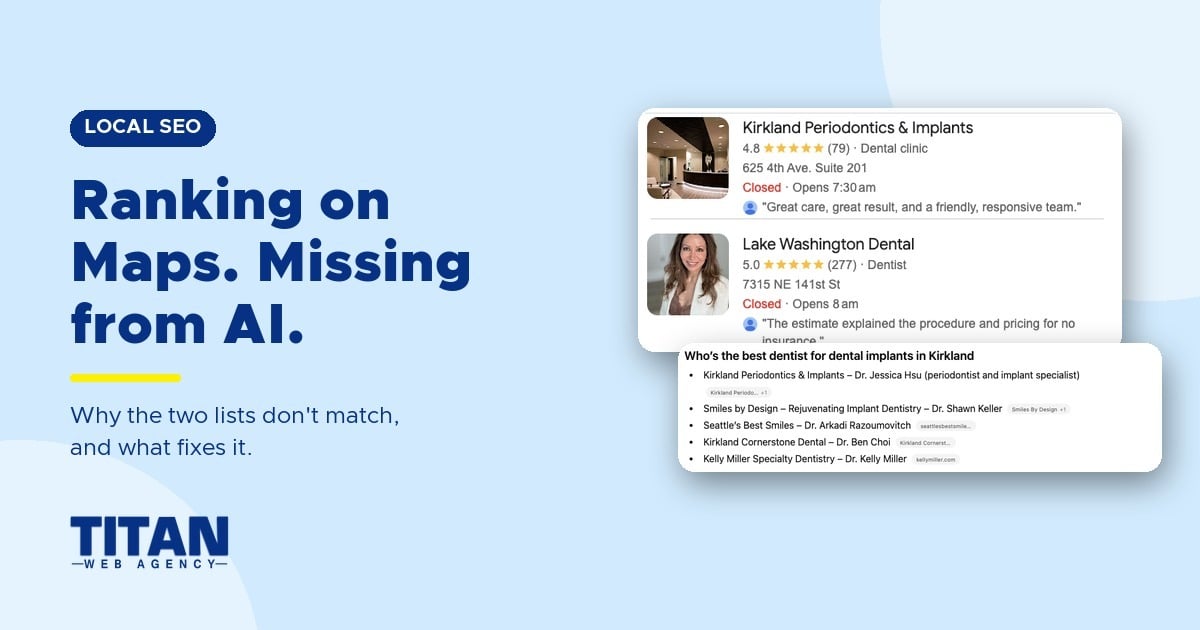
### Why Your Dental Practice Appears in Local Search Results but Not in AI Answers
When patients search for a dentist today, the process often...
Updated September 26, 2026
[Read More .svg)](https://blog.titanwebagency.com/google-maps-vs-ai-search)
### Google Business Profile for Dentists: What Changing Google My Business Means for Your Practice
Google is the king of search engines and that means...
Updated September 24, 2026
[Read More .svg)](https://blog.titanwebagency.com/google-business-profile-for-dentists)
[](https://titanwebagency.com/)
[Results](https://titanwebagency.com/results/)
[Reviews](https://titanwebagency.com/reviews/)
[Portfolio](https://titanwebagency.com/portfolio/)
[](https://www.google.com/partners/agency?id=6710457398)
SERVICES
- [Local SEO](https://titanwebagency.com/services/local-seo/)
- [AI Search Optimization](https://titanwebagency.com/services/ai-geo/)
- [Pay Per Click Management](https://titanwebagency.com/services/pay-per-click/)
- [Web Design](https://titanwebagency.com/services/web-design/)
- [Logo Design](https://titanwebagency.com/services/logo-design/)
- [Website Hosting & Maintenance](https://titanwebagency.com/services/website-maintenance/)
- [Review Management](https://titanwebagency.com/services/review-management/)
- [Branding & Rebranding](https://titanwebagency.com/services/branding-rebranding/)
RESOURCES
- [Dental Marketing Guide](https://titanwebagency.com/dental-marketing-guide/)
- [How to Get More Dental Patients](https://titanwebagency.com/attract-dental-patients/)
- [Running a Dental Practice](https://titanwebagency.com/running-a-dental-practice/)
- [Dental Practice Transitions](https://titanwebagency.com/dental-practice-transitions/)
- [Blog](https://blog.titanwebagency.com/)
- [Podcast](https://titanwebagency.com/podcast/)
GET IN TOUCH
[Call (801) 783-3101→](tel:8017833101) Schedule a call→ [Contact form→](https://titanwebagency.com/contact/)
[](https://www.facebook.com/TitanWebAgency) [](https://twitter.com/TitanWebAgency) [](https://instagram.com/titanwebagency/) [](https://www.linkedin.com/company/titan-web-agency) [](https://www.youtube.com/user/TitanWebAgency)
Copyright © 2026 [Titan Web Agency.](https://titanwebagency.com/) All rights reserved.
[Privacy Policy](https://titanwebagency.com/privacy-policy/)[Cookie Policy](https://titanwebagency.com/cookie-policy/)[Contact](https://titanwebagency.com/contact/)[Utah Dental Web Design](https://titanwebagency.com/utah-dental-web-design-company/)[Utah Dental SEO](https://titanwebagency.com/utah-dental-seo-company/)[Utah Dental Marketing](https://titanwebagency.com/utah-dental-marketing-agency/)


[ Call](tel:(801)%20783-3101) [ Schedule](https://app.lunacal.ai/titanwebagency/meeting/embed?embed=meeting&layout=&embedType=inline&duration=15) [ Contact Us](https://titanwebagency.com/contact/)
```json
{
"@context" : "https://schema.org",
"@id" : "https://blog.titanwebagency.com/local-seo-guide-for-dentists#article",
"@type" : "BlogPosting",
"associatedMedia" : {
"@type" : "AudioObject",
"embedUrl" : "https://414867.fs1.hubspotusercontent-na1.net/hubfs/414867/AI-Generated%20Media/Post%20Narration%20Audio/206745587499-TTS-1770213681274.mp3",
"name" : "Local SEO Guide for Dentists: What Works in 2026 and What Doesn’t (Audio)",
"url" : "https://414867.fs1.hubspotusercontent-na1.net/hubfs/414867/AI-Generated%20Media/Post%20Narration%20Audio/206745587499-TTS-1770213681274.mp3"
},
"author" : {
"@type" : "Person",
"name" : "Tyson Downs",
"sameAs" : [ "https://www.linkedin.com/in/tysondowns/" ],
"url" : "https://blog.titanwebagency.com/author/tyson-downs"
},
"dateModified" : "2026-10-18T15:04:29-06:00",
"datePublished" : "2026-02-04T09:00:00-07:00",
"description" : "Have you already worked with a marketing company on your online presence and SEO, but local results still feel weak?",
"hasPart" : [ {
"@type" : "Question",
"acceptedAnswer" : {
"@type" : "Answer",
"text" : "In competitive areas, meaningful local SEO improvements usually take 60 to 90 days once core issues are fixed. Faster movement often happens when visibility problems come from accuracy, clarity, or trust gaps rather than authority alone. Fixing Google Business Profile issues shows the impact fastest. Review consistency often influences results within weeks. Content and authority changes take longer to compound."
},
"name" : "How long does local SEO take to work for dentists in a competitive area?"
}, {
"@type" : "Question",
"acceptedAnswer" : {
"@type" : "Answer",
"text" : "Local SEO is working when calls, direction requests, and bookings increase, not just impressions or rankings. Visibility without patient action usually means intent or trust is missing. Calls from Google Business Profile increase. Direction requests trend upward. Booked appointments can be tied to local pages."
},
"name" : "How do I know if my dental local SEO is actually working?"
}, {
"@type" : "Question",
"acceptedAnswer" : {
"@type" : "Answer",
"text" : "Yes. Local search rewards relevance, proximity, and trust, not brand size alone. Smaller practices often win by being clearer, more consistent, and better aligned with patient intent. Accurate listings outperform big brands with messy data. Strong reviews narrow authority gaps. Clear service focus beats broad positioning."
},
"name" : "Can a small dental practice outrank bigger competitors in local search results?"
}, {
"@type" : "Question",
"acceptedAnswer" : {
"@type" : "Answer",
"text" : "Start with accuracy and clarity, not new tactics. Most stalled performance comes from conflicting information or unclear service relevance. Google Business Profile accuracy. Core listings and NAP consistency. Service pages that match patient intent."
},
"name" : "What should I fix first if my dental local SEO isn’t working?"
}, {
"@type" : "Question",
"acceptedAnswer" : {
"@type" : "Answer",
"text" : "The fundamentals haven’t changed, but execution matters more. Google looks for confidence, not volume. Google Business Profile relevance and activity. Review quality and consistency. Clear service and location signals. Website content that matches local intent."
},
"name" : "What are the most important local SEO ranking factors for dentists in 2026?"
}, {
"@type" : "Question",
"acceptedAnswer" : {
"@type" : "Answer",
"text" : "A strong dental location page proves the practice actually serves that area and makes it easy to act. Thin or copied pages usually fail. Localized introduction written for that area. Services offered at that location. Local proof, such as reviews or landmarks. Clear call or booking options."
},
"name" : "What should a dental location page include for local SEO in 2026?"
}, {
"@type" : "Question",
"acceptedAnswer" : {
"@type" : "Answer",
"text" : "Fixing Google Business Profile issues is usually the fastest lever. Accuracy, categories, services, reviews, and photos often unlock visibility that’s already available. Correct categories and services. Improve review consistency. Add clear photos and updates. Remove conflicting business details."
},
"name" : "What is the fastest way to improve local visibility for a dental practice without running ads?"
} ],
"headline" : "Local SEO Guide for Dentists: What Works in 2026 and What Doesn’t",
"image" : {
"@type" : "ImageObject",
"height" : 620,
"url" : "https://414867.fs1.hubspotusercontent-na1.net/hubfs/414867/Local%20SEO%20Guide%20for%20Dentists%20What%20Works%20in%202026%20and%20What%20Doesn%E2%80%99t_2.jpg",
"width" : 1200
},
"inLanguage" : "en",
"isPartOf" : {
"@id" : "https://blog.titanwebagency.com/#blog",
"@type" : "Blog",
"name" : "Titan Web Agency Blog",
"url" : "https://blog.titanwebagency.com/"
},
"mainEntityOfPage" : {
"@id" : "https://blog.titanwebagency.com/local-seo-guide-for-dentists",
"@type" : "WebPage"
},
"publisher" : {
"@type" : "Organization",
"logo" : {
"@type" : "ImageObject",
"height" : 180,
"url" : "https://titanwebagency.com/wp-content/uploads/2025/01/LOGO3-New-Blue-No-Tagline-Titan-Blue-Logo-1-1.png",
"width" : 453
},
"name" : "Titan Web Agency",
"url" : "https://titanwebagency.com/"
},
"url" : "https://blog.titanwebagency.com/local-seo-guide-for-dentists"
}
```